I am doing weight watchers on my own and have the books to track my points. However, I don't know how activity points work. If I earned 5 activity points in a day, do I get an extra five points of food or is the activity point scale completely unrelated to food?
So, for the most part I should be exercising and not increasing my point value?
Best answer:
Yes, you can trade your activity points for food points, that is how it works, but , realize that this will just mean that activity is NOT increasing your weight loss.
What do you think? Answer below!
Weight Watchers? WW44 by Conair Glass Digital Scale
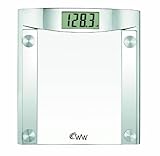
- Engineered to the highest precision standards
- Oversized, easy-to-read, large 1.5" digital display
- 400 lb weight capacity and displays weight in 0.1 lb or 50 g increments
- Large, high-strength, impact-resistant, 12.25" x 14" glass platform with polished chrome frame
- "Tap-on" scale activator
Weight management just got more stylish with our Weight Watchers® by Conair Glass Digital Scale. It has an oversized, easy-to-read, large 1.5" digital display plus a large, high-strength, impact-resistant 12.25" x 14" glass platform with polished chrome frame, which looks great in any bathroom.

List Price: $ 49.99
Price: $ 33.11
Magic Formula Stock Review: Weight Watchers (WTW)
Article by MagicDiligence.com
Weight Watchers (WTW) is one of the largest and best known weight-management firms in the world, capturing nearly 3% of the huge and very fragmented billion dollar market. Weight Watchers' business centers around weekly meetings that help educate and provide group support for those trying to lose weight. 1.4 million people attend Weight Watchers each week, about 50,000 meetings. Each meeting is run by a "classroom leader" employed by the company, teaching and motivating clients, who either pay on a per-visit or monthly basis. 60% of Weight Watchers' sales come from meeting fees.
Additionally, Weight Watchers sells products such as food, books, scales, and so forth, making up 22% of sales. Online sales from Weightwatchers.com make up 12%, and the balance is made up of brand licensing and royalties from the company's remaining franchisees. The company has been moving away from a franchise model for some time, opportunistically buying up franchisees, and currently company-owned centers account for 82% of meeting attendance.
Growth has been respectable over the past 5 years, with sales increasing by over 10% annually. Going forward, there is modest growth potential. 66% of the U.S. population is overweight, and an alarming 1/3rd are considered obese. Fortunately for Weight Watchers, this trend does not seem to be going away. In fact, it will likely worsen worldwide with improving economic conditions. The company has also done a good job over the past few years of capturing revenues from the member base by offering a monthly payment plan, grabbing sales from those who may not even attend a meeting. Improving the targeting of men (something NutriSystem NTRI has done very well) expands the company's addressable market going forward. Measured international expansion into Europe and Australia has been quite successful. Finally, Weight Watchers has begun licensing the brand to high quality consumer products companies, and there is good potential for growth here. I would look for mid-to-high single digit growth rates over the next few years, assuming normal economic conditions.
Weight Watchers also has a solid competitive position within a very crowded and faddish marketplace. The company has been around since the 1960's, building a well-known and respected brand, by far the best in a business filled with fraud. Also, the meeting-based structure would be extremely difficult for a competitor to duplicate on a large scale. Customers that experience success within this structure are reluctant to leave it. While no weight management firm can truly claim an insurmountable economic moat due to high customer turnover and loads of alternative offerings, Weight Watchers certainly has many advantages over the competition.
Financial health is my biggest concern with this one. The firm was a leveraged buyout by private equity firm Artal Luxembourg, who then spun the company public with a big debt burden. They maintain over 50% voting control. This may have something to due with Weight Watchers' continued liberal use of debt. There is a staggering .5 billion dollar debt load, versus a small million dollars in cash. Interest payments are covered by operating earnings about 5.5 times over, which is just above MagicDiligence's absolute minimum. Debt due within one year is about 0 million, and free cash flow is about 0 million or so - that's cutting it really close. Weight Watchers also has a million dollar dividend to cover (a 2.4% yield). Only a truly recession-proof business should even consider running a balance sheet like this, not a consumer discretionary business like weight management. The complete lack of a safety margin disqualifies Weight Watchers as a consideration for the MagicDiligence Top Buys portfolio.
I believe it is likely that Weight Watchers will continue generating sufficient cash flow to service and pay down the debt. The business itself is outstanding, with 30% operating margins, 20% free cash margins, and return on capital averaging well over 20% (135% on a Magic Formula-adjusted basis). Earnings yield (operating earnings over enterprise value) is just over 10%, which is cheap but not bargain basement. MagicDiligence is hesitantly putting a positive opinion on the stock. But be aware: if something unforeseen happens - a hugely successful diet pill, highly publicized misconduct by meeting leaders, whatever - the highly leveraged balance sheet would lead to immediate concerns over the future of the company. Again, I think the likelihood of these things happening is very low, but the risk is magnified if they do.
Orignal From: Weight Watchers and Activity Points?

No comments:
Post a Comment